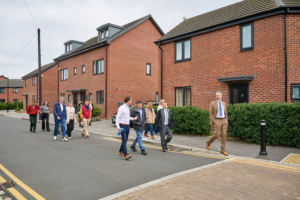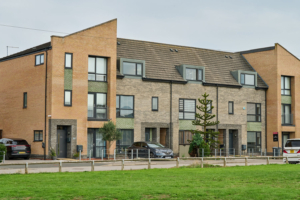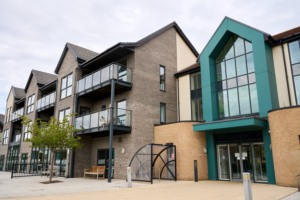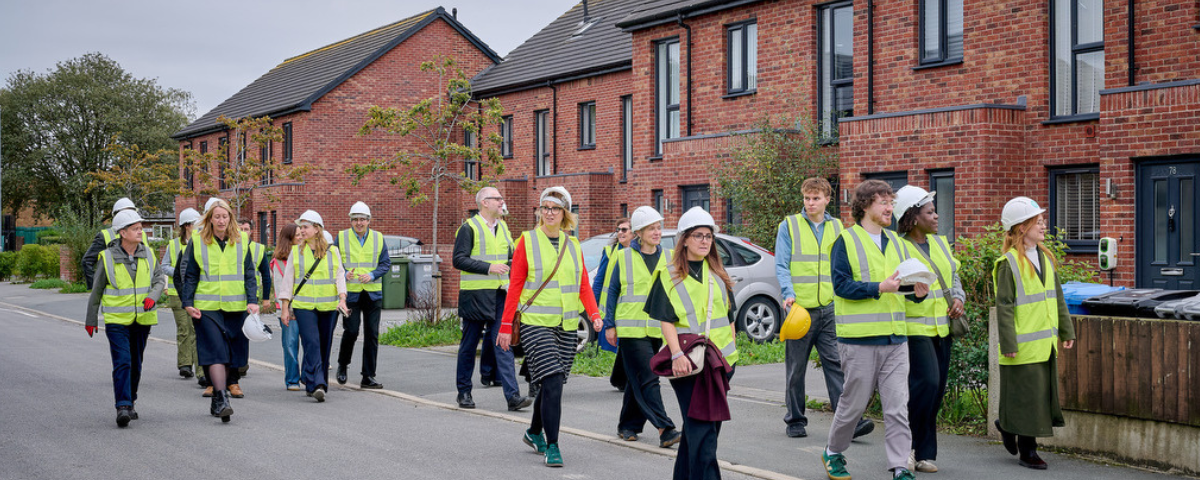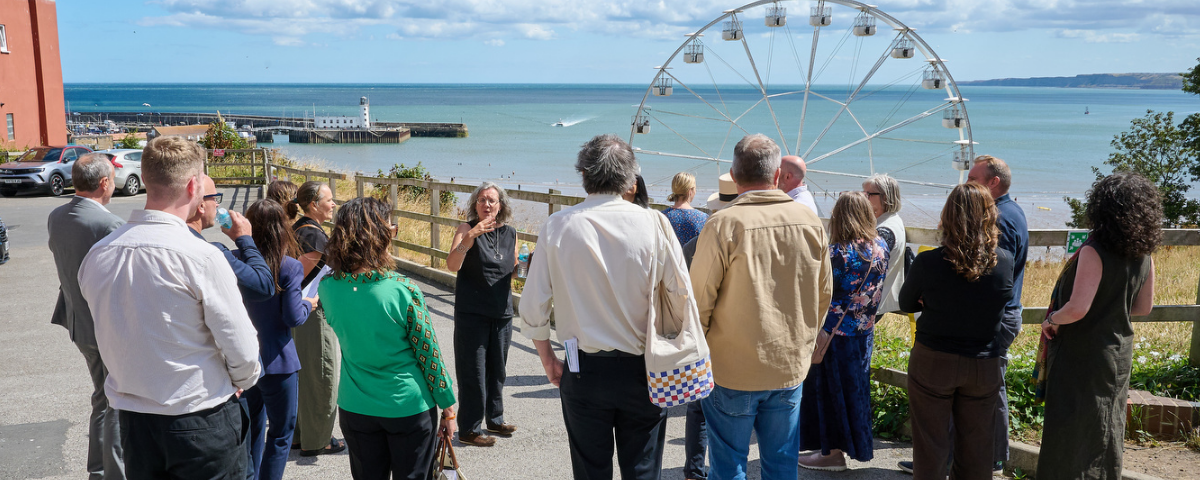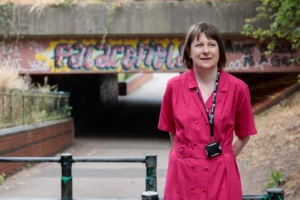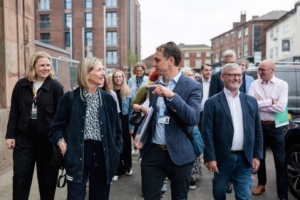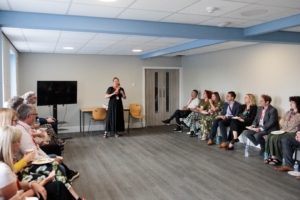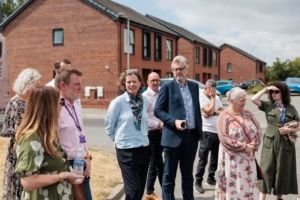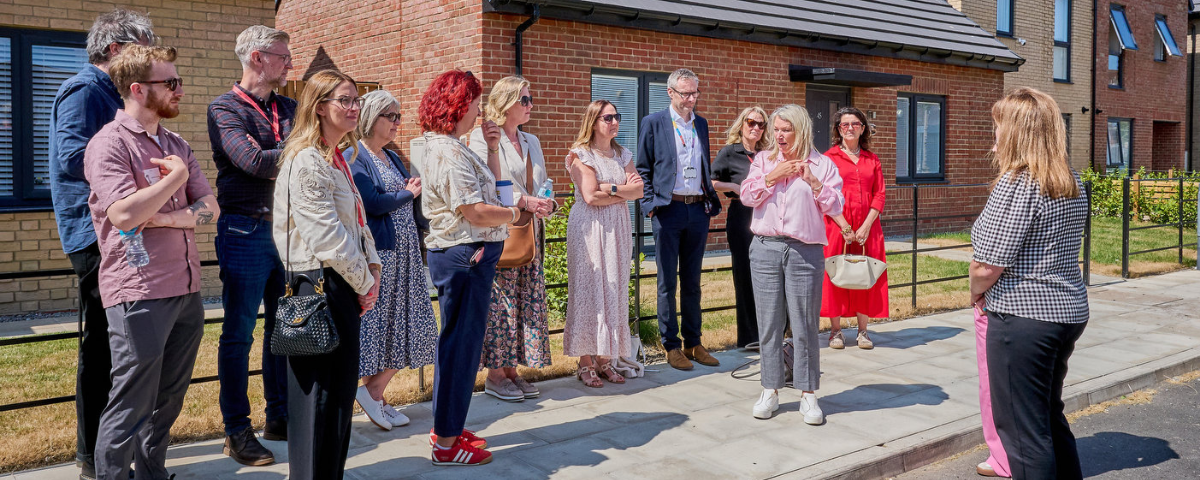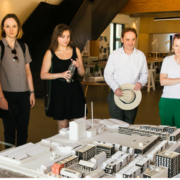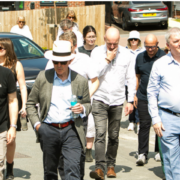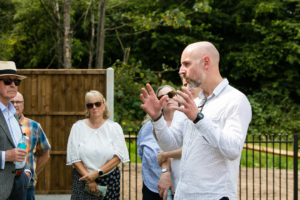
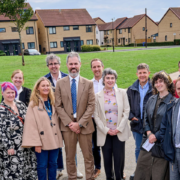
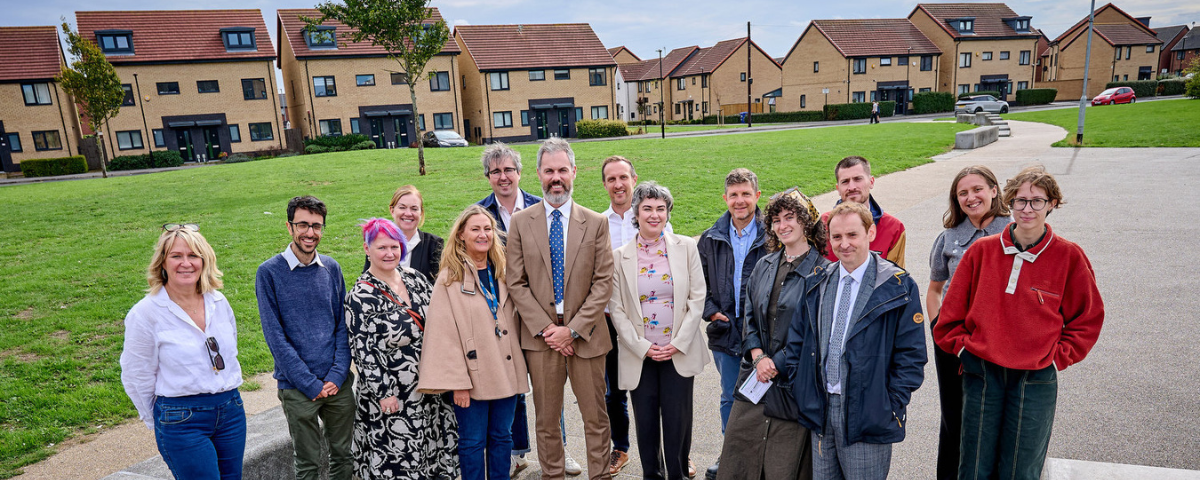
Renew visited Middlesborough to see one of the UK’s largest urban brownfield regeneration sites. The tour also went to some of the UK’s most deprived estates where progress is being made with regeneration, but significant barriers still exist.  

Renewal of homes in the Private Rented Sector (PRS) was also discussed – particularly what can be done to improve the lowest quality PRS homes and the challenges of improving social housing estates when they are pepper potted with Right to Buy Homes, now often in the PRS.  

Thank you to the Tees Valley Housing Partnership for arranging the tour and to Sharon Thomas, Chief Investment & Property Officer, Thirteen Group, Emma Speight, Executive Director of Assets and Growth, North Star and Richard Horniman, Director of Regeneration, Middlesbrough Council for sharing their experiences.  

Middlehaven 

The first stop was Middlehaven one of the largest urban brownfield regeneration sites in the country, with capacity for over 2,000 new homes. Middlesbrough Council is looking to take the site forward with Manchester-based developer Capital & Centric with planning permission for the first homes expected in early 2027. The development will be targeted at a younger population and developed as an entirely new urban community. 

The development of a new community at Middlehaven is the number one priority in the council’s Place Strategy, Town Centre Strategy and Investment Prospectus. However, the Middlehaven site presents many challenges, including the need for significant remediation and challenging topography. The development of early phases will require significant gap funding, and the council will work closely work closely with Capital & Centric to make the case for investment to Homes England and others. 

Union Village in Gresham  

Next up was Union Village in Gresham, one of England’s most deprived neighbourhoods, which has faced deep-rooted challenges for decades. Following Housing Market Renewal funding withdrawal in 2010, 600 homes had been demolished, leaving vacant brownfield land. 

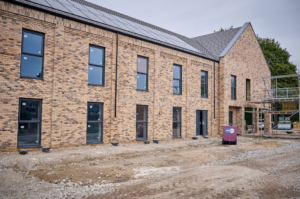
Unable to attract private developers, Middlesbrough Council and Thirteen formed a partnership to deliver Union Village, overcoming viability and pandemic delays before completion in 2025. The development provides 145 bungalows, houses, and apartments arranged to support a safe and inclusive community, with homes clustered around secure communal gardens  

As well as a tour of the site we also held a discussion about challenges at the lowest end of the Private Rented sector, something which is a significant challenge in Middlesbrough. Housing consultant Carla Keegans, who founded the Ethical Lettings Agency in Redcar and Richard Horniman from Middlesbrough Council shared their experiences.  

Hillside Gardens in Grove Hill 

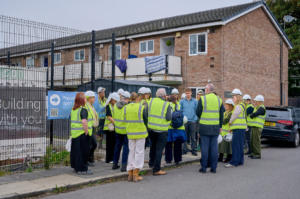
The final stop of the tour was Hillside Gardens in Grove Hill. Most of this estate was built in the 1930s and since the 2004 there have been plans to replace homes on the estate. Some parts of the estate were ranked in the 1% most deprived areas in the country and there were high numbers of empty homes, with some areas having more than 50% of properties sitting vacant.  

Residents’ appetite for change was also strong. A community consultation confirmed concerns about crime, anti-social behaviour and drugs. Most people said they didn’t feel safe walking in the estate, three quarters supported selective demolitions, while 86% supported the development of new homes.   

But regeneration efforts were dealt a blow by the 2008 financial crash. Prospective private developer partners withdrew and adopted a more risk averse position for some years.  

A new masterplan proposing further demolitions and the development of 700 new homes was put forward in 2010. But securing interest from the private sector proved elusive. Meanwhile, selective demolitions progressed, with a total of 600 homes bulldozed in the nine years up to 2014. Some infill sites were built back and around 130 new homes delivered, but large areas of land sat vacant for more a decade as the economic downturn continued to bite.  

The deadlock was broken when Thirteen secured funding support from Homes England to develop 92 new homes for affordable rent on one such site, off Bishopton Road. Work started in 2018 and was completed in 2020. The final handovers of a further 296 new homes for affordable rent, supported by Homes England’s Affordable Homes Programme and a £2.8million contribution from Tees Valley Combined Authority’s Brownfield Housing Fund, are set to take place this month (July 2026).  

But there’s lots more to be done. Hundreds more homes are reaching the “end of life” stage and do not meet modern aspirations and expectations. High levels of deprivation remain.  

Financial viability remains the biggest barrier to going further. Site clearance costs are one thing, but another obstacle is the significant number of Right to Buy homes on the estate, many of which are private rented. These would require buy outs, and a lack of funding for that makes wholesale regeneration incredibly difficult. 

Our Renew Advisory Group met to review activity so far, including the launch of Unlocking over 500,000 good quality homes in the North, and what the project should prioritise to maintain momentum. 

Following the meeting, the group visited city centre brownfield developments on the South Bank in Leeds, which has been earmarked as a new town, and Sugarhill in Oulton where 70 prefabricated Airey homes have been replaced by 70 new homes. 

The first stop on the tour was Citu’s Climate Innovation District has which has transformed a central brownfield site in Leeds into a green neighbourhood with 516 low-energy homes, alongside new amenities.  There are no cars on the development, although underground parking is available.  This means Citu have been able to tear up the conventional suburban streetscape, with drives and fenced gardens, instead focusing on shared communal green spaces.  

The homes are manufactured at the Citu Factory on site and are made from timber and lower-carbon materials. They are much quicker to build than traditionally constructed homes, and they have a significantly lower carbon footprint. Yorkshire Housing is working closely with Citu, and has partnered on delivery of social rent homes on the development, meaning people on lower incomes can live in homes with much lower bills. Citu and Yorkshire Housing also share the UK’s first zero carbon office – the location for the advisory group meeting.  

Next up was Sugar Hill in Oulton, where we met John and Cindy Readman of the ‘Save our Homes’ group, who led a high profile campaign against a private landlord selling off the post-war Airey homes on the site. In 2022 Leeds Fedarated took on the development. They weren’t able to promise to save the homes, as they were had already exceeded their intended lifespan. Leeds Federated proposed a development of 70 modern, sustainable homes with a mix of properties for social rent and shared ownership. They worked closely with residents, giving existing residents priority on the new homes, and rebuilding trust which the old landlord had broken. 

John and Cindy recently moved back into a new modern home and have been helping create a community on the estate, bringing together new and existing residents. The Save our Homes group didn’t save the Airey prefabs, but they were able to save the community, and make sure residents had better homes to live in.   

Leeds City Council’s Mark Mills   presented plans for their new Mayoral Development Zone, a partnership of Leeds City Council, West Yorkshire Combined Authorities and Homes England, which will see development of 20,000 new homes in Leeds. The group walked through the South Bank area. The area has already seen some redevelopment, but this should be accelerated though the new town programme. Lorna Hebden from Leeds City Council highlighted about viability challenges on brownfield sites and the need for public subsidiary. She also talked about the challenges of getting the right balance between commercial and residential properties.  

It was an informative day which will feed valuable lessons into Renew. Thank you to Nick Atkin and Yorkshire Housing for hosting and to Matthew Walker and Leeds Federated, and Leeds City Council for sharing their experiences.  


Andy Burham MP was today appointed as Prime Minister, the seventh Prime Minister in ten years.  

Mr Burham has promised to ‘do things differently’ and to take a more collaborative approach to politics. He has pledged to launch a new 10-year plan for Britian later this year, though he was keen to stress he will also make changes from the start, including ending rough sleeping and building more council houses.  

During his leadership campaign, he reiterated his support for devolution and spoke about the importance of regeneration.  

Northern Housing Consortium Chief Executive Tracy Harrison said:  

“We look forward to working with the new Prime Minister to give hope back to forgotten places. A good quality, affordable home is one of life’s essentials. Our Renew inquiry has found that housing-led regeneration can unlock at least 500,000 good quality homes across the North of England. It can bring hope by making sure more people have a great place to live, improving and residents’ health and wellbeing, and generating jobs. Housing-led regeneration – reviving struggling high streets with new homes, developing forgotten brownfield land, and renewing and redeveloping homes that no longer meet the needs of communities – can help bring growth to every postcode.  

“The new Prime Minister has acknowledged the importance of regeneration, so we hope he will seize the moment to build on investment that the Government has already made in housing, with long-term devolved regeneration funding, and support to build local capacity and expertise. Our policy recommendations are about ensuring that regeneration is viable and achievable across the North, which has diverse needs and challenges beyond our cities. As Lara Joyce, Secretary of Gleadless Resident’s Association said, we need “to make it safe to feel hope again”. 

“Andy Burnham is a big backer of devolution, and we know he wants to build on the success we have already seen in the North. In areas where devolution has progressed further, social housing providers and other partners have collaborated and have had real success scaling up what works for communities so more people and places benefit.”  

Many of our members in Greater Manchester have worked closely with Andy Burham during his time as Mayor. Northern Housing Consortium Chair, Chief Executive of MSV Housing, and Chair of Greater Manchester Housing Providers Charlie Norman said:

“It has been great working with Andy Burham in Greater Manchester for the last 9 years, collaborating on a place first and housing first agenda, with people at its heart.” 


A Westminster Hall debate on estate regeneration was called by Luke Murphy, MP for Basingstoke. It triggered a lively discussion with broad consensus on the benefits of estate regeneration and the need to make sure it is done with residents rather than to them.  

Chair of our Renew Westminster Group, Andrew Cooper MP spoke as part of the debate referencing findings from the recent Renew report ‘Unlocking 500,000 good quality homes in the North’  

Northern Housing Consortium Chief Executive Tracy Harrison said:  

“Housing-led regeneration is central to tackling the housing crisis in the North, so we were pleased to see the Westminster Hall debate on estate regeneration. Andy Burnham MP is making regeneration a priority, so it is great to see the issue is gaining the political momentum it deserves. Regeneration is a key issue for the NHC, our members, and communities across the North.  

“Chair of our Renew Westminster Group, Andrew Cooper MP, referenced our Renew inquiry, supported by Homes for North and Muse, during the debate. Mr Cooper highlighted that without significant intervention, 100,000 social homes in the North could be lost over the coming decade. He also spoke about the far-reaching benefits of housing-led regeneration, and the need for regeneration to be delivered with communities.  

 “However, as Mr Cooper said, the challenge now is to turn ambition into delivery. Our Renew report shows that this cannot be done at the scale needed without support from Government to make estate regeneration in the North stack up. This includes long-term, devolved regeneration funding; a stronger national focus to enable local delivery, and support to build local capacity and expertise. Our policy recommendations are about ensuring that regeneration is viable and achievable across the North, which has diverse needs and challenges beyond our cities.” 

 “As was highlighted in the debate, the need to do regeneration with communities is also coming across strongly in the work of our inquiry. Our site visits are showing how crucial residents are in developing and delivering regeneration that makes a difference to people’s lives in communities across the North.” 

The NHC’s Renew inquiry into housing-led regeneration for northern growth is calling for greater Government support to boost supply of new homes in the North, kickstart economic growth and create thriving communities.  

Headline policy recommendations include:  

Long-term devolved regeneration funding  

  • A £500m per year, 10-year Place Based Regeneration Fund for Mayoral Strategic Authorities. 
  • Increase the term of the National Housing Delivery Fund to 10 years to unlock more sites with higher upfront costs. 

A national framework to enable local delivery:  

  • A Minister for Regeneration to drive cross-government coordination. 

Build local capacity and expertise:  

  • Create a National Centre for Regeneration, based in the North, to rebuild capacity across the sector and lead research and innovation. 

Build trust with residents 

  • Agree a set of standards and rights with residents involved in regeneration.

A link to Parliament TV coverage of the debate is here and the Hansard transcript is here 

 Below is a transcript of the debate contribution from Andrew Cooper MP:  

 It is a pleasure to serve under your chairmanship, Dr Murrison. I congratulate my hon. Friend the Member for Basingstoke (Luke Murphy) on securing this debate. I want to speak about the importance of housing-led regeneration. Done well, it transforms lives, rebuilds communities, unlocks economic growth and creates places where people want to live, work and raise families. Yet for many communities across the north, that aspiration remains out of reach. 

Too many families live in ageing homes that are expensive to maintain, difficult to modernise and increasingly unfit for today’s needs. In many neighbourhoods, outdated layouts and ageing infrastructure no longer meet the needs of the communities they serve. Without significant intervention, 100,000 social homes could be lost over the coming decade, further reducing the supply of affordable housing. It is against that backdrop that the interim findings of the Renew inquiry are so important—I declare my interest as chair of the Westminster group for the inquiry. 

Led by the Northern Housing Consortium, the inquiry highlights the vital role that regeneration can play in addressing housing needs, supporting economic development and strengthening communities across the north of England. The Renew report found that more than half a million good-quality homes could be unlocked through regeneration and renewal programmes, demonstrating the scale of the opportunity before us. The report highlights the transformative impact that regeneration can have on people and places. Beyond increasing housing supply, it offers an opportunity to create healthier, more sustainable communities, to reduce energy costs for residents, and to improve the overall quality of life in neighbourhoods that have experienced years of under-investment. 

Importantly, regeneration delivers benefits that extend far beyond housing alone. Investment in homes can help attract investment in infrastructure, town centres and local services. It creates jobs, supports skills development and gives communities greater confidence in their future.  

 The impact therefore reaches well beyond the development site itself, generating wider social value and helping to create vibrant, sustainable places. However, successful regeneration cannot simply be done to communities; it must be delivered with communities. Residents should be at the heart of regeneration plans, helping to shape the future of the places they call home. 

 A good example can be found in the Gleadless Valley regeneration project in Sheffield. Residents’ involvement has shaped the vision for the valley to include commercial and community space, improved parks, paths, and jobs and training for local residents. Lara Joyce, from the Gleadless Valley tenants and residents association, described the process as “making hope feel safe again”.  

That clearly demonstrates the importance of building trust with residents and ensuring local voices are heard throughout the process. 

What is particularly encouraging is the growing recognition that the success of regeneration should not be measured solely by the number of homes delivered. Its value can also be seen in a stronger local economy, improved wellbeing and a more resilient community. The challenge now is to turn that ambition into delivery. If we get regeneration right, we will not simply build more homes. We will rebuild neighbourhoods, revitalise businesses and restore pride in communities. That is why housing-led regeneration matters, and why it deserves our continued support. 


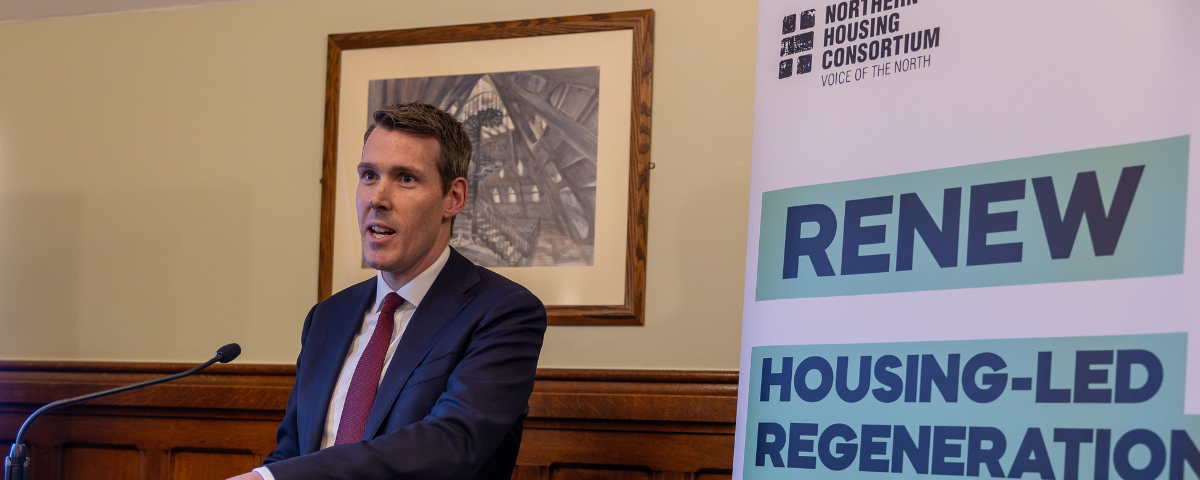
Housing Minister Matthew Pennycook MP spoke at the launch of the first Renew research report ‘Unlocking over 500,000 good quality homes in the North’.   

The event took place in Westminster, and there was a strong turnout of parliamentarians. The Minister welcomed the new report and reflected on the importance of regeneration. He listened to all the speakers and engaged with guests.

Other speakers included Andrew Cooper MP, who hosted the event and explained why good quality housing is so important. Lord Best OBE DL shared why he is chairing Renew and the importance of addressing poor quality homes alongside increasing new supply.   

Our Chief Executive Tracy Harrison gave an overview of the report, highlighting the opportunity to boost supply of new homes in the North, kickstart economic growth and create thriving communities though housing led regeneration. She highlighted that housing providers in the North faced significant barriers, and only with support to overcome viability issues can the true potential of housing-led regeneration be unlocked.  

Chief Executive of MSV housing and NHC Chair, Charlie Norman, gave a member’s perspective and drawing on her experience in Greater Manchester, highlighted how devolution can support regeneration.  Secretary of the Gleadless Valley Residents Association Lara Joyce shared how regeneration can bring a sense of hope to residents, and why it’s important to deliver on promises to keep local people’s trust. She also talked about the importance of involving residents in shaping plans for their community.  

What was clear from the event – and the report – is that housing-led regeneration is more than bricks and mortar and balance sheets. It is change for communities that need it most, and in Lara’s words, it’s about it feeling safe to feel hope.

The Northern Housing Consortium (NHC) has today welcomed Andy Burnham’s focus on greater devolution of powers to places, and his statement that regeneration will be one of No10 North’s three priority areas. He stressed that everything starts with a good home, and the country needs to put that at the top of its priority list.

Andy Burnham’s call for greater devolution and a focus on housing and regeneration reflects recommendations made by the NHC’s current Renew inquiry into housing-led regeneration and how it can deliver growth, help tackle the housing crisis, and strengthen communities across the North.

Research published by the NHC through its inquiry earlier this month showed that housing-led regeneration can unlock at least 500,000 good-quality homes across the North. This includes more than 100,000 new homes in town and city centres, 320,000 homes on brownfield land and the renewal or replacement of 100,000 social homes in need of regeneration.

The Renew inquiry draws on evidence from organisations responsible for around one million of the North’s 1.4 million social homes and insights from more than 160 regeneration schemes.

Tracy Harrison, Chief Executive, NHC, said

“We welcome this renewed focus on regeneration and putting power back into the hands of people and places. In fact, it’s like he’s read our recent Renew Inquiry report and acted on it!

Giving the proposed No.10 North the power to focus on regeneration could be game changing for local communities. It’s great to see the importance of a good quality home as a foundation of a good life so clearly recognised. Our extensive research with housing providers in the North through the Renew Inquiry shows that housing-led regeneration is essential to increase the supply of new homes, attract private investment, and boost economic growth across our northern regions. It helps create great places to live, improves housing quality and residents’ health and wellbeing, generates jobs and skills opportunities, and promotes sustainability by providing greener, more energy-efficient homes that lower household bills.”

“The North’s towns and cities have different strengths, challenges and ambitions. People who know these places best are local leaders, working alongside residents, housing providers and businesses. More power must be devolved to them. It was great to hear the importance of collaboration to drive change, something that is happening across the North’s housing partnerships.”

These themes will be a key focus of the NHC’s Housing Partnerships Northern Conference on 2nd July in Leeds, which will bring together housing partnerships, Mayoral Strategic Authorities and key local stakeholders together to share learning and shape future policy.

The far-reaching role of housing-led regeneration, and the Renew inquiry, and partnership working have been big talking points at the Great Northern Theatre 26.

The importance of housing-led regeneration shone through in the morning. The day opened with a speech from Lord Best who set out how the continued focus on new homes was crowding out regeneration, despite a clear need. However, he was optimistic that the tide was turning, and the Renew inquiry, which he chairs, is a big part of this.

Next up was Patrick Murray, NHC Executive Director (Policy and External Relations) who shared the latest findings from Renew inquiry report ‘Unlocking over 500,000 good quality homes in the North’. He highlighted how housing-led regen is critical to driving growth, and invaluable in making sure smaller towns and places are not left behind. He talked about devolution and how we are already seeing benefits of a more place-based approach. However, he said there is a structural viability gap in the North and this can only be overcome with the right government support.

The next session, chaired by Inside Housing Editor Martin Hillditch, featured a range of perspectives on why regeneration at scale is important. Rachel Dennis Chief Executive, Incommunities said it was vital to address the full picture.  In Bradford, where Incommunities is based, estate regeneration needs greater support to avoid ‘a doughnut of deprivation’ around the city centre. John Johnson Chief Executive, Bernicia Group talked about devolution being a potential gamechanger, but that central government needed to fully trust devolved authorities. Lara Joyce Secretary of the Gleadless Valley Resident Association shared how regeneration gives residents hope but that promises must be kept to avoid breaking residents’ trust. Finally, Phil Mayall Managing Director of Muse talked about why homes are an essential part of creating places people can thrive. However, he said viability challenges and the skills gap were holding things back.

The final session of the morning, chaired by Claire Warren, Chief Executive, Pickering and Ferens Homes covered community-led renewal. The panellists Cedric Boston, Group Chief Executive, Unity Homes and Enterprise, Louise Davies, Executive Director of Communities and Regeneration, Cobalt Housing, Darren Sterling, Assistant Director Strategy and Community Regeneration, Newcastle City Council  and Kemoy Walker, youth ambassador at  MSV Housing, were all clear that to really understand what residents want housing providers need to embed themselves in communities. Housing colleagues should go to where the residents are, for example youth clubs or community events.

In the afternoon the focus shifted onto devolution and partnership working. To avoid a post-lunch slump proceedings started with an illuminating conversion between Inside Housing Martin Hilditch and designer Wayne Hemmingway, who famously spoke out against the ‘Wimpyfication of Britain’. The chat covered housing design, the effects of high land values and the role of culture in driving regeneration.

Up next was a panel session about ‘Integrated settlements: Building connected systems for long-term growth’, chaired by Tracy Harrsion, with Ruth Davison Interim Director of Environment and Place, West Yorkshire Combined Authority, Ed Ferrari, Research Director, Mosidi, and Tom Hinchcliffe Director of Housing First, Greater Manchester Combined Authority. The panel agreed that we’ve come a long way with devolution, and that integrated settlements are helping deliver a more joined up approach to places. Importantly the discussion focused on the democratic mandate of Mayors and how more accountability should flow to local communities rather than central Government.

This was followed by a panel session on effective partnerships chaired by NHC Deputy Chief Executive James Ealey. Marc Edwards, Executive Director of Property at Gentoo, spoke about the North East Housing Partnership’s collaborative planned investment partnership which is helping North East housing providers save millions on the installation of new kitchens and create local employment opportunities. Shazia Bashir, Partner, Winckworth Sherwood, shared insights on partnerships from a legal perspective. Robin Tuddenham, Chief Executive, Calderdale Council, spoke about the need for local authorities to step forward and take a leading role in partnerships, and to get the balance right between structure and collaboration. Sasha Deepwell, Chief Executive, Irwell Valley Homes shared her experience of being part of Greater Manchester Housing Providers, the longest established housing partnership, and the huge impact it is having.

The afternoon was rounded off with a positive discussion, chaired by Tracy Harrison, about the northern offer and what we’ll deliver together. Nick Atkin, Yorkshire Housing Chief Executive, stressed that the social housing sector has a once a generation opportunity to make a difference and that we’re ready to step up. Tom Bridges Executive Regional Director (North East, Yorkshire & Humber), Homes England spoke about Homes England’s increased focus on placemaking and the opportunities available through the Social and Affordable Homes Programme and the National Housing Bank. Alison Dean Chief Executive Officer, Great Places felt optimistic, sharing examples of work happening in Greater Manchester and South Yorkshire, including bringing disused brownfield land back into use and renewing estates to make sure everyone has access to a good home.

The Great North Theatre showcased some of the fantastic work going on in the North. The message was clear – even more can be done with further support for housing-led regeneration and continued devolution.

The Renew inquiry visited regeneration sites in Halifax to see what can be achieved and where even more can be done. Calderdale Council and Together Housing Group, who have been part of an investment partnership since 2017, hosted the visit.

The first stop on the tour was Boltworks where 122 new Build to Rent flats were built on a disused car park by Placefirst. Viability challenges were overcome through funding, including money from the Brownfield Housing Fund, to deliver good quality homes. This development, which completed in 2025, meets the need for smaller properties in the City ward due to a high proportion of single person households.

Next stop was the award-winning Beech Hill Regeneration project where 106 new affordable homes replaced three tower blocks which no longer met modern standards. In phase two, 70 mixed-tenure homes in the surrounding area were repaired and made more energy efficient. This reinvigorated the area which was becoming neglected and isolated.

After that we walked through the impressive Dean Clough, a former carpet mill that’s now a hotel, gallery, shops, restaurants and offices up to Haley Hill, a trio of 1960s tower blocks.  These homes will benefit from Together Housing’s investment and retrofit work to ensure they remain modern, safe places to live. 

Tower blocks were a hot topic of conversation. Together Housing spoke about their high-rise strategy and how they balance “immediate safety and compliance requirements with long-term investment decisions that deliver modern, sustainable homes and support thriving communities.”

The final stop of the tour was Minster View – a brownfield site which recently went out to market. It is hoped development of the land will contribute to town centre regeneration objectives as well as enhancing the local economy. The tour was rounded of by walking back through the regenerated Borough Market.

Earlier in the day the Renew Reference Group, a group of NHC members coming together to share insight on regeneration, met for a roundtable discussion about the latest findings from Renew, high rise development and the ten-year vision for Halifax. 

The Renew inquiry will visit more regeneration sites over the summer to document what works well and where more needs to be done. Renew is supported by Homes for the North and Muse.

Housing-led regeneration can unlock at least 500,000 good quality homes across the North of England according to a new report published by the Northern Housing Consortium’s Renew inquiry today.

This includes reviving struggling high streets with over 100,000, new homes in town and city centres, building 320,000 homes on brownfield land and renewing or replacing 100,000 social homes in need of regeneration.

The report, which launched in parliament today, is based on evidence from organisations responsible for around 1 million of the North’s 1.4 million social homes. Insights from more than 160 regeneration schemes have informed the findings.

The research comes at a pivotal moment for the social housing sector, with significant new Government investment and growing devolution powers enabling northern leaders to shape housing, transport, and skills policy more effectively. However, regeneration in the North faces significant barriers including lower land values and high remediation costs for brownfield sites, making many schemes unviable without Government support. In addition, lower rents but similar costs for northern social housing providers means investment in refurbishing and replacing homes often comes at the cost of building new homes.

Renew is calling for greater Government support to boost supply of new homes in the North, kickstart economic growth and create thriving communities.

Headline policy recommendations from the report ‘Unlocking over 500,000 good quality homes in the Northinclude:

Long-term devolved regeneration funding

  • A £500m per year, 10-year Place Based Regeneration Fund for Mayoral Strategic Authorities.
  • Increase the term of the National Housing Delivery Fund to 10 years to unlock more sites with higher upfront costs.

A national framework to enable local delivery:

  • A Minister for Regeneration to drive cross-government coordination.

Build local capacity and expertise:

  • Create a National Centre for Regeneration, based in the North, to rebuild capacity across the sector and lead research and innovation.

Build trust with residents:

  • Agree a set of standards and rights with residents involved in regeneration.


Northern Housing Consortium Chief Executive Tracy Harrison said:

“Now is the time to put the final pieces of the jigsaw in place to tackle the housing crisis, build thriving places and healthier homes, and deliver northern growth.

“This research shows that housing-led regeneration is essential to increase the supply of new homes, attract private investment, and boost economic growth in the North. It helps create great places to live, improves housing quality and residents’ health and wellbeing, generates jobs and skills opportunities, and promotes sustainability by providing greener, more energy-efficient homes that lower household bills.

“If the Government is serious about delivering 1.5m homes and making sure no-one and nowhere is left behind it must act now to further support housing-led regeneration in the North. Replacing old and cold homes people no longer want to live in will give forgotten areas a new lease of life, transforming communities and encouraging development.”


Chair of Homes for North and Group Chief Executive of Karbon Homes Paul Fiddaman said:

“Homes for the North strongly supports the Renew inquiry. Regeneration is central to delivering more and better homes, improving existing communities and unlocking the North’s economic potential.

“Our members have already mapped a major pipeline of regeneration opportunities across the North, including projects in some of the country’s most deprived communities, but too many schemes remain constrained by inflexible funding rules, viability gaps and fragmented delivery systems.

“Policy reform and long-term partnership with government at all levels to address these issues could enable housing associations to help turn a major regeneration pipeline into lasting social and economic value.”


Managing Director of Muse Phil Mayall said:

“We’re pleased to have supported this important new report published by the Northern Housing Consortium’s Renew inquiry today.

“The role of regeneration in not only tackling the housing crisis across the North but also supporting the socio-economic growth of communities is clear. Yet, for many in the sector, the ability to deliver high-quality homes for people to live as part of thriving, well-designed communities are held back by the barrier of viability.

“Across many towns and cities, brownfield sites are at the heart of regeneration ambitions, bringing disused and underutilised sites back into productive use. However, the financial viability gap remains a major obstacle.

“Without the right policy framework and investment, many otherwise deliverable projects will struggle to come forward. The recommendations in this report are an important step towards creating the certainty, funding and local capacity needed to unlock regeneration at scale.

“At Muse, we know from our work across the North that long-term partnership is critical to making complex regeneration happen. If we are serious about delivering more homes and creating successful places, we need to give local leaders and delivery partners the tools to turn ambition into reality.”


Over the summer, we will host a series of tours to regeneration sites across the North to learn lessons from successfully completed sites, projects in-progress and schemes unable to get off the ground despite clear regeneration needs. Further research and engagement will include looking at the role of tenant engagement in shaping and delivering successful regeneration projects.

You can access the full report and executive summary here.

Members from across the North East came together for the first Renew Regeneration Site Tour. This was hosted by the North East Housing Partnership, offering a valuable opportunity to see how housing-led regeneration is transforming communities while also highlighting delivery challenges. The tour forms part of our Renew inquiry, which is explores how regeneration can drive growth, tackle the housing crisis and strengthen communities across the North. 

At Cleadon Park in South Shields, the visit demonstrated the long-term impact of sustained investment and strong partnership working. Once one of the most deprived areas in the country, the estate has been transformed by replacing more than 500 outdated homes with around 750 new properties.  A strong focus on community engagement has been central to this success, helping to improve wellbeing, opportunity and pride in the area.  

We also heard about plans for regeneration in Felling, to make sure the right homes are in place to complement other improvements to the town centre, including through Pride in Place funding. However, scheme viability is proving challenging, making it difficult to get much-needed new homes off the ground. 

The final visits to Bensham and Saltwell showed how innovative partnerships are unlocking development, with new, high-quality homes bringing long-vacant sites back into use and supporting more inclusive, sustainable communities. Development of social housing, including homes specifically tailored for the area’s orthodox Jewish community, have acted as a catalyst for development of further new homes for private sale, which are in high demand. This shows the economic and social value of replacing homes that no longer meet the needs of communities. 

Overall, the tour reinforced that housing-led regeneration can deliver lasting change, but greater support and investment will be critical to unlocking its full potential. We are conducting more tours across the North as part of our Renew work. To find out more visit the Renew website.