
Renew inquiry discussed in Westminster Hall debate on estate regeneration

A Westminster Hall debate on estate regeneration was called by Luke Murphy, MP for Basingstoke. It triggered a lively discussion with broad consensus on the benefits of estate regeneration and the need to make sure it is done with residents rather than to them.
Chair of our Renew Westminster Group, Andrew Cooper MP spoke as part of the debate referencing findings from the recent Renew report ‘Unlocking 500,000 good quality homes in the North’
Northern Housing Consortium Chief Executive Tracy Harrison said:
“Housing-led regeneration is central to tackling the housing crisis in the North, so we were pleased to see the Westminster Hall debate on estate regeneration. Andy Burnham MP is making regeneration a priority, so it is great to see the issue is gaining the political momentum it deserves. Regeneration is a key issue for the NHC, our members, and communities across the North.
“Chair of our Renew Westminster Group, Andrew Cooper MP, referenced our Renew inquiry, supported by Homes for North and Muse, during the debate. Mr Cooper highlighted that without significant intervention, 100,000 social homes in the North could be lost over the coming decade. He also spoke about the far-reaching benefits of housing-led regeneration, and the need for regeneration to be delivered with communities.
“However, as Mr Cooper said, the challenge now is to turn ambition into delivery. Our Renew report shows that this cannot be done at the scale needed without support from Government to make estate regeneration in the North stack up. This includes long-term, devolved regeneration funding; a stronger national focus to enable local delivery, and support to build local capacity and expertise. Our policy recommendations are about ensuring that regeneration is viable and achievable across the North, which has diverse needs and challenges beyond our cities.”
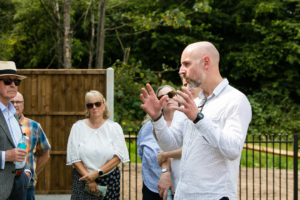
“As was highlighted in the debate, the need to do regeneration with communities is also coming across strongly in the work of our inquiry. Our site visits are showing how crucial residents are in developing and delivering regeneration that makes a difference to people’s lives in communities across the North.”
The NHC’s Renew inquiry into housing-led regeneration for northern growth is calling for greater Government support to boost supply of new homes in the North, kickstart economic growth and create thriving communities.
Headline policy recommendations include:
Long-term devolved regeneration funding
- A £500m per year, 10-year Place Based Regeneration Fund for Mayoral Strategic Authorities.
- Increase the term of the National Housing Delivery Fund to 10 years to unlock more sites with higher upfront costs.
A national framework to enable local delivery:
- A Minister for Regeneration to drive cross-government coordination.
Build local capacity and expertise:
- Create a National Centre for Regeneration, based in the North, to rebuild capacity across the sector and lead research and innovation.
Build trust with residents:
- Agree a set of standards and rights with residents involved in regeneration.
A link to Parliament TV coverage of the debate is here and the Hansard transcript is here.
Below is a transcript of the debate contribution from Andrew Cooper MP:
It is a pleasure to serve under your chairmanship, Dr Murrison. I congratulate my hon. Friend the Member for Basingstoke (Luke Murphy) on securing this debate. I want to speak about the importance of housing-led regeneration. Done well, it transforms lives, rebuilds communities, unlocks economic growth and creates places where people want to live, work and raise families. Yet for many communities across the north, that aspiration remains out of reach.
Too many families live in ageing homes that are expensive to maintain, difficult to modernise and increasingly unfit for today’s needs. In many neighbourhoods, outdated layouts and ageing infrastructure no longer meet the needs of the communities they serve. Without significant intervention, 100,000 social homes could be lost over the coming decade, further reducing the supply of affordable housing. It is against that backdrop that the interim findings of the Renew inquiry are so important—I declare my interest as chair of the Westminster group for the inquiry.
Led by the Northern Housing Consortium, the inquiry highlights the vital role that regeneration can play in addressing housing needs, supporting economic development and strengthening communities across the north of England. The Renew report found that more than half a million good-quality homes could be unlocked through regeneration and renewal programmes, demonstrating the scale of the opportunity before us. The report highlights the transformative impact that regeneration can have on people and places. Beyond increasing housing supply, it offers an opportunity to create healthier, more sustainable communities, to reduce energy costs for residents, and to improve the overall quality of life in neighbourhoods that have experienced years of under-investment.
 Importantly, regeneration delivers benefits that extend far beyond housing alone. Investment in homes can help attract investment in infrastructure, town centres and local services. It creates jobs, supports skills development and gives communities greater confidence in their future.
The impact therefore reaches well beyond the development site itself, generating wider social value and helping to create vibrant, sustainable places. However, successful regeneration cannot simply be done to communities; it must be delivered with communities. Residents should be at the heart of regeneration plans, helping to shape the future of the places they call home.
A good example can be found in the Gleadless Valley regeneration project in Sheffield. Residents’ involvement has shaped the vision for the valley to include commercial and community space, improved parks, paths, and jobs and training for local residents. Lara Joyce, from the Gleadless Valley tenants and residents association, described the process as “making hope feel safe again”.
That clearly demonstrates the importance of building trust with residents and ensuring local voices are heard throughout the process.
What is particularly encouraging is the growing recognition that the success of regeneration should not be measured solely by the number of homes delivered. Its value can also be seen in a stronger local economy, improved wellbeing and a more resilient community. The challenge now is to turn that ambition into delivery. If we get regeneration right, we will not simply build more homes. We will rebuild neighbourhoods, revitalise businesses and restore pride in communities. That is why housing-led regeneration matters, and why it deserves our continued support.

