The Northern Housing Consortium (NHC) has today welcomed Andy Burnham’s focus on greater devolution of powers to places, and his statement that regeneration will be one of No10 North’s three priority areas. He stressed that everything starts with a good home, and the country needs to put that at the top of its priority list.

Andy Burnham’s call for greater devolution and a focus on housing and regeneration reflects recommendations made by the NHC’s current Renew inquiry into housing-led regeneration and how it can deliver growth, help tackle the housing crisis, and strengthen communities across the North.

Research published by the NHC through its inquiry earlier this month showed that housing-led regeneration can unlock at least 500,000 good-quality homes across the North. This includes more than 100,000 new homes in town and city centres, 320,000 homes on brownfield land and the renewal or replacement of 100,000 social homes in need of regeneration.

The Renew inquiry draws on evidence from organisations responsible for around one million of the North’s 1.4 million social homes and insights from more than 160 regeneration schemes.

Tracy Harrison, Chief Executive, NHC, said

“We welcome this renewed focus on regeneration and putting power back into the hands of people and places. In fact, it’s like he’s read our recent Renew Inquiry report and acted on it!

Giving the proposed No.10 North the power to focus on regeneration could be game changing for local communities. It’s great to see the importance of a good quality home as a foundation of a good life so clearly recognised. Our extensive research with housing providers in the North through the Renew Inquiry shows that housing-led regeneration is essential to increase the supply of new homes, attract private investment, and boost economic growth across our northern regions. It helps create great places to live, improves housing quality and residents’ health and wellbeing, generates jobs and skills opportunities, and promotes sustainability by providing greener, more energy-efficient homes that lower household bills.”

“The North’s towns and cities have different strengths, challenges and ambitions. People who know these places best are local leaders, working alongside residents, housing providers and businesses. More power must be devolved to them. It was great to hear the importance of collaboration to drive change, something that is happening across the North’s housing partnerships.”

These themes will be a key focus of the NHC’s Housing Partnerships Northern Conference on 2nd July in Leeds, which will bring together housing partnerships, Mayoral Strategic Authorities and key local stakeholders together to share learning and shape future policy.

The far-reaching role of housing-led regeneration, and the Renew inquiry, and partnership working have been big talking points at the Great Northern Theatre 26.

The importance of housing-led regeneration shone through in the morning. The day opened with a speech from Lord Best who set out how the continued focus on new homes was crowding out regeneration, despite a clear need. However, he was optimistic that the tide was turning, and the Renew inquiry, which he chairs, is a big part of this.

Next up was Patrick Murray, NHC Executive Director (Policy and External Relations) who shared the latest findings from Renew inquiry report ‘Unlocking over 500,000 good quality homes in the North’. He highlighted how housing-led regen is critical to driving growth, and invaluable in making sure smaller towns and places are not left behind. He talked about devolution and how we are already seeing benefits of a more place-based approach. However, he said there is a structural viability gap in the North and this can only be overcome with the right government support.

The next session, chaired by Inside Housing Editor Martin Hillditch, featured a range of perspectives on why regeneration at scale is important. Rachel Dennis Chief Executive, Incommunities said it was vital to address the full picture.  In Bradford, where Incommunities is based, estate regeneration needs greater support to avoid ‘a doughnut of deprivation’ around the city centre. John Johnson Chief Executive, Bernicia Group talked about devolution being a potential gamechanger, but that central government needed to fully trust devolved authorities. Lara Joyce Secretary of the Gleadless Valley Resident Association shared how regeneration gives residents hope but that promises must be kept to avoid breaking residents’ trust. Finally, Phil Mayall Managing Director of Muse talked about why homes are an essential part of creating places people can thrive. However, he said viability challenges and the skills gap were holding things back.

The final session of the morning, chaired by Claire Warren, Chief Executive, Pickering and Ferens Homes covered community-led renewal. The panellists Cedric Boston, Group Chief Executive, Unity Homes and Enterprise, Louise Davies, Executive Director of Communities and Regeneration, Cobalt Housing, Darren Sterling, Assistant Director Strategy and Community Regeneration, Newcastle City Council  and Kemoy Walker, youth ambassador at  MSV Housing, were all clear that to really understand what residents want housing providers need to embed themselves in communities. Housing colleagues should go to where the residents are, for example youth clubs or community events.

In the afternoon the focus shifted onto devolution and partnership working. To avoid a post-lunch slump proceedings started with an illuminating conversion between Inside Housing Martin Hilditch and designer Wayne Hemmingway, who famously spoke out against the ‘Wimpyfication of Britain’. The chat covered housing design, the effects of high land values and the role of culture in driving regeneration.

Up next was a panel session about ‘Integrated settlements: Building connected systems for long-term growth’, chaired by Tracy Harrsion, with Ruth Davison Interim Director of Environment and Place, West Yorkshire Combined Authority, Ed Ferrari, Research Director, Mosidi, and Tom Hinchcliffe Director of Housing First, Greater Manchester Combined Authority. The panel agreed that we’ve come a long way with devolution, and that integrated settlements are helping deliver a more joined up approach to places. Importantly the discussion focused on the democratic mandate of Mayors and how more accountability should flow to local communities rather than central Government.

This was followed by a panel session on effective partnerships chaired by NHC Deputy Chief Executive James Ealey. Marc Edwards, Executive Director of Property at Gentoo, spoke about the North East Housing Partnership’s collaborative planned investment partnership which is helping North East housing providers save millions on the installation of new kitchens and create local employment opportunities. Shazia Bashir, Partner, Winckworth Sherwood, shared insights on partnerships from a legal perspective. Robin Tuddenham, Chief Executive, Calderdale Council, spoke about the need for local authorities to step forward and take a leading role in partnerships, and to get the balance right between structure and collaboration. Sasha Deepwell, Chief Executive, Irwell Valley Homes shared her experience of being part of Greater Manchester Housing Providers, the longest established housing partnership, and the huge impact it is having.

The afternoon was rounded off with a positive discussion, chaired by Tracy Harrison, about the northern offer and what we’ll deliver together. Nick Atkin, Yorkshire Housing Chief Executive, stressed that the social housing sector has a once a generation opportunity to make a difference and that we’re ready to step up. Tom Bridges Executive Regional Director (North East, Yorkshire & Humber), Homes England spoke about Homes England’s increased focus on placemaking and the opportunities available through the Social and Affordable Homes Programme and the National Housing Bank. Alison Dean Chief Executive Officer, Great Places felt optimistic, sharing examples of work happening in Greater Manchester and South Yorkshire, including bringing disused brownfield land back into use and renewing estates to make sure everyone has access to a good home.

The Great North Theatre showcased some of the fantastic work going on in the North. The message was clear – even more can be done with further support for housing-led regeneration and continued devolution.

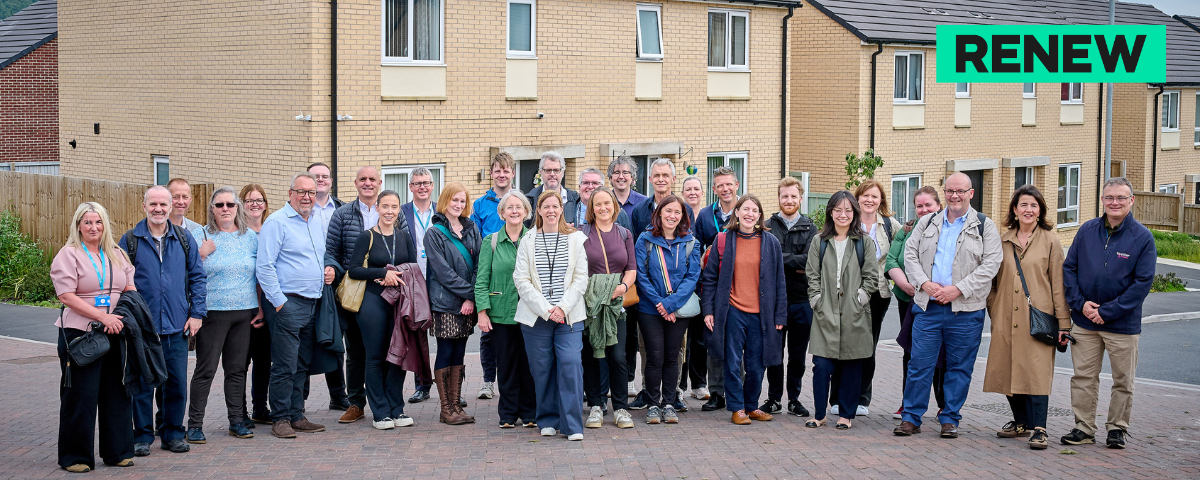
The Renew inquiry visited regeneration sites in Halifax to see what can be achieved and where even more can be done. Calderdale Council and Together Housing Group, who have been part of an investment partnership since 2017, hosted the visit.

The first stop on the tour was Boltworks where 122 new Build to Rent flats were built on a disused car park by Placefirst. Viability challenges were overcome through funding, including money from the Brownfield Housing Fund, to deliver good quality homes. This development, which completed in 2025, meets the need for smaller properties in the City ward due to a high proportion of single person households.

Next stop was the award-winning Beech Hill Regeneration project where 106 new affordable homes replaced three tower blocks which no longer met modern standards. In phase two, 70 mixed-tenure homes in the surrounding area were repaired and made more energy efficient. This reinvigorated the area which was becoming neglected and isolated.

After that we walked through the impressive Dean Clough, a former carpet mill that’s now a hotel, gallery, shops, restaurants and offices up to Haley Hill, a trio of 1960s tower blocks.  These homes will benefit from Together Housing’s investment and retrofit work to ensure they remain modern, safe places to live. 

Tower blocks were a hot topic of conversation. Together Housing spoke about their high-rise strategy and how they balance “immediate safety and compliance requirements with long-term investment decisions that deliver modern, sustainable homes and support thriving communities.”

The final stop of the tour was Minster View – a brownfield site which recently went out to market. It is hoped development of the land will contribute to town centre regeneration objectives as well as enhancing the local economy. The tour was rounded of by walking back through the regenerated Borough Market.

Earlier in the day the Renew Reference Group, a group of NHC members coming together to share insight on regeneration, met for a roundtable discussion about the latest findings from Renew, high rise development and the ten-year vision for Halifax. 

The Renew inquiry will visit more regeneration sites over the summer to document what works well and where more needs to be done. Renew is supported by Homes for the North and Muse.

Housing-led regeneration can unlock at least 500,000 good quality homes across the North of England according to a new report published by the Northern Housing Consortium’s Renew inquiry today.

This includes reviving struggling high streets with over 100,000, new homes in town and city centres, building 320,000 homes on brownfield land and renewing or replacing 100,000 social homes in need of regeneration.

The report, which launched in parliament today, is based on evidence from organisations responsible for around 1 million of the North’s 1.4 million social homes. Insights from more than 160 regeneration schemes have informed the findings.

The research comes at a pivotal moment for the social housing sector, with significant new Government investment and growing devolution powers enabling northern leaders to shape housing, transport, and skills policy more effectively. However, regeneration in the North faces significant barriers including lower land values and high remediation costs for brownfield sites, making many schemes unviable without Government support. In addition, lower rents but similar costs for northern social housing providers means investment in refurbishing and replacing homes often comes at the cost of building new homes.

Renew is calling for greater Government support to boost supply of new homes in the North, kickstart economic growth and create thriving communities.

Headline policy recommendations from the report ‘Unlocking over 500,000 good quality homes in the Northinclude:

Long-term devolved regeneration funding

  • A £500m per year, 10-year Place Based Regeneration Fund for Mayoral Strategic Authorities.
  • Increase the term of the National Housing Delivery Fund to 10 years to unlock more sites with higher upfront costs.

A national framework to enable local delivery:

  • A Minister for Regeneration to drive cross-government coordination.

Build local capacity and expertise:

  • Create a National Centre for Regeneration, based in the North, to rebuild capacity across the sector and lead research and innovation.

Build trust with residents:

  • Agree a set of standards and rights with residents involved in regeneration.


Northern Housing Consortium Chief Executive Tracy Harrison said:

“Now is the time to put the final pieces of the jigsaw in place to tackle the housing crisis, build thriving places and healthier homes, and deliver northern growth.

“This research shows that housing-led regeneration is essential to increase the supply of new homes, attract private investment, and boost economic growth in the North. It helps create great places to live, improves housing quality and residents’ health and wellbeing, generates jobs and skills opportunities, and promotes sustainability by providing greener, more energy-efficient homes that lower household bills.

“If the Government is serious about delivering 1.5m homes and making sure no-one and nowhere is left behind it must act now to further support housing-led regeneration in the North. Replacing old and cold homes people no longer want to live in will give forgotten areas a new lease of life, transforming communities and encouraging development.”


Chair of Homes for North and Group Chief Executive of Karbon Homes Paul Fiddaman said:

“Homes for the North strongly supports the Renew inquiry. Regeneration is central to delivering more and better homes, improving existing communities and unlocking the North’s economic potential.

“Our members have already mapped a major pipeline of regeneration opportunities across the North, including projects in some of the country’s most deprived communities, but too many schemes remain constrained by inflexible funding rules, viability gaps and fragmented delivery systems.

“Policy reform and long-term partnership with government at all levels to address these issues could enable housing associations to help turn a major regeneration pipeline into lasting social and economic value.”


Managing Director of Muse Phil Mayall said:

“We’re pleased to have supported this important new report published by the Northern Housing Consortium’s Renew inquiry today.

“The role of regeneration in not only tackling the housing crisis across the North but also supporting the socio-economic growth of communities is clear. Yet, for many in the sector, the ability to deliver high-quality homes for people to live as part of thriving, well-designed communities are held back by the barrier of viability.

“Across many towns and cities, brownfield sites are at the heart of regeneration ambitions, bringing disused and underutilised sites back into productive use. However, the financial viability gap remains a major obstacle.

“Without the right policy framework and investment, many otherwise deliverable projects will struggle to come forward. The recommendations in this report are an important step towards creating the certainty, funding and local capacity needed to unlock regeneration at scale.

“At Muse, we know from our work across the North that long-term partnership is critical to making complex regeneration happen. If we are serious about delivering more homes and creating successful places, we need to give local leaders and delivery partners the tools to turn ambition into reality.”


Over the summer, we will host a series of tours to regeneration sites across the North to learn lessons from successfully completed sites, projects in-progress and schemes unable to get off the ground despite clear regeneration needs. Further research and engagement will include looking at the role of tenant engagement in shaping and delivering successful regeneration projects.

You can access the full report and executive summary here.