
Regeneration lessons in Greater Manchester
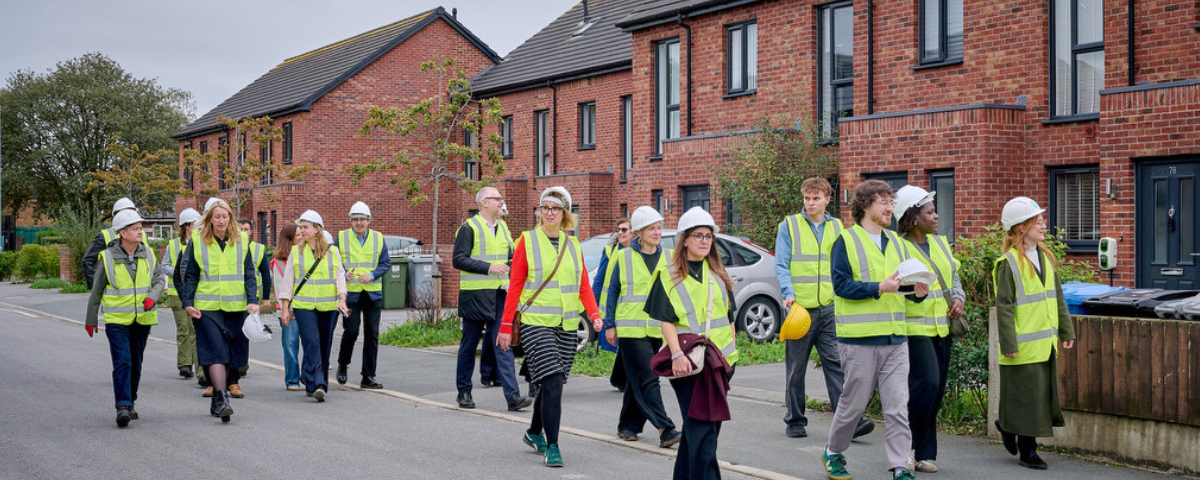
The Greater Manchester Housing Partnership hosted the Renew project in the last of our series of study visits.
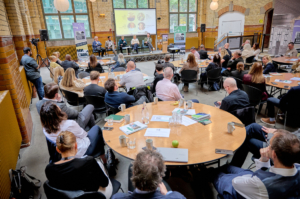
The day started with the Great North Regeneration Debate. This was hosted by Great Places at the People’s History Museum, the venue in which Andy Burham recently outlined his vision for the UK before taking up the reigns as Prime Minister.
Chief executive of Great Places Alison Dean introduced and summarised the debate. The discussion was chaired by Cavandish’s Sean Fielding, who is also Bolton Council’s Cabinet member for Adults and Community Housing. On the panel was Catherine Birks, Senior Director at CBRE UK, Ibby Ismail, Board Member and customer of MSV Housing, Phil Mayall, Managing Director of Muse and Ed Ferrari, Director Mosodi.
The conversation centred on how regeneration can support the Government’s growth agenda, tackle the housing crisis and create places where people can thrive. It covered the impact of devolution, the long-term nature of regeneration and why we need to challenge economic orthodoxy to bring hope to places. A key theme throughout was the need to work alongside communities from the outset to achieve consensus on regeneration plans. The event also shone a spotlight on the Renew Inquiry and its recommendations for driving growth, improving housing and strengthening communities across the North.
After the debate Renew advisory group members travelled to Irwell Valley Housing offices for a working lunch to discuss the next steps with the inquiry. This included the #Renew the North campaign in the run up to the Autumn Budget and community engagement research.
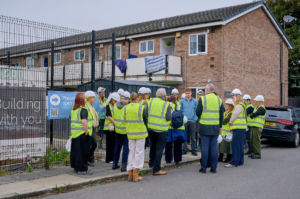
After lunch the group was joined by other stakeholders including Chair of the Renew Westminster Group Andrew Cooper MP and colleagues from Ministry of Housing, Communities and Local Government. The first stop on the tour was Sale West in Trafford, a long-term housing-led regeneration programme running from 2020 to 2027. The vision for the £50 million masterplan is to deliver 263 new homes, enhance green spaces and biodiversity, and improve 1,100 existing homes.
Chief Executive of Irwell Valley Homes Sasha Deepwell explained how investment in community facilities, allotments, play areas and activities and initiatives delivered through a community café have strengthened social connection, reduced isolation and improved wellbeing.
The group was joined by Ralph Redden, Chair of the Sale West resident group, who explained when the Radburn design estate was built it was billed as the “jewel in the crown of Manchester Borough Housing.” However, by the time it was transferred to Irwell Valley Homes in 2000 it was very much a tarnished jewel. Reflecting on the recent improvements he said: “now it’s been polished and is once again a sparkling jewel.”
Ralph’s assessment of success is also strongly backed by figures. In the 2019 Index of Multiple Deprivation the estate ranked within the 20% most deprived neighbourhoods nationally and was identified in the Trafford Core Strategy as a Priority Regeneration Area. By 2025, the area had moved to being ranked within to within the top 30% of most deprived neighbourhoods, indicating reduced deprivation and better access to housing and services. This is a significant improvement, which the regeneration activity will have played a big part in.
The project has only been possible due Irwell’s Valley Homes’ willingness to pool funding from different pots, including Homes England, Brownfield Land and Levelling Up funding to start work on the project before all funding was confirmed. The estate is surrounded by more affluent areas, prompting discussion about how it can be challenging to secure funding to address pockets of deprivation in more affluent areas. The discussion concluded that this type of project will only be possible on a larger scale if long term dedicated regeneration funding is introduced.
Next stop was Moss Side where MSV Chief Executive and Chair of the NHC Charlie Norman and MSV colleagues shared details of ongoing regeneration work in Moss Side. The includes a mix of building new homes on brownfield sites, improving existing homes and investing in community projects. The team talked about Positive Futures, which supports residents to develop skills for employment, the Blunt Truth, an initiative to prevent knife crime, and the Brotherhood Peace garden, a welcoming space where people feel connected, supported and proud of their community.
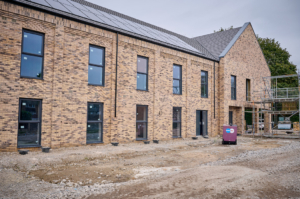
The site of the old Reno nightclub on Princess Road, which has been vacant for many years, is next on the list to develop. The scheme will provide 212 new social and affordable homes for people local to the Moss Side, including some homes deigned for older people and wheelchair users. There is a strong focus on protecting local heritage, creating more green spaces and embedding social value throughout the development and the wider community.
MSV and partners at Manchester City Council consulted local residents and businesses, including the neighbouring West Indian Sports & Social Club. Their feedback has been incorporated into plans. This includes adjusting the layout of the scheme and reducing the number of homes proposed.
MSV hope to be on site with this scheme as soon as possible but are experiencing delays due to complications with purchasing a derelict building which sits on the site. Funding can only be confirmed once land ownership has been finalised, leaving MSV balancing considerable financial risk, and pausing other regeneration activity while this issue is resolved.
This visit has shown that regeneration can be done for and with communities. However for these types of project to be done on a bigger scale, so the social and economic benefits reach more people, dedicated funding for housing-led regeneration is essential.

