
PHYSICAL REGENERATION TRANSFORMING HOUSING DEMAND, NEIGHBOURHOOD CONFIDENCE AND WELLBEING.
Shildon
Context
Jubilee Fields Estate in Shildon demonstrates the impact housing-led regeneration can achieve when physical investment is combined with strong community partnership and long-term commitment.
Following the closure of the British Rail Wagon Works in 1986, Shildon experienced significant socio-economic decline. By the early 2010s, Jubilee Fields had become one of Livin’s poorest-performing estates, with low demand, high anti-social behaviour (ASB), deteriorating estate conditions and poor resident feedback.
The estate falls within the top 10% most deprived IMD areas nationally, with high levels of child poverty, worklessness and poor health outcomes.
Prior to regeneration, some homes attracted as few as two bids, reflecting the estate’s poor reputation and low demand. Residents also raised concerns about outdated homes, unsafe layouts and environmental conditions.
Project
Recognising that minor repairs would not reverse decline, Livin developed a comprehensive housing-led regeneration programme co-developed with residents.
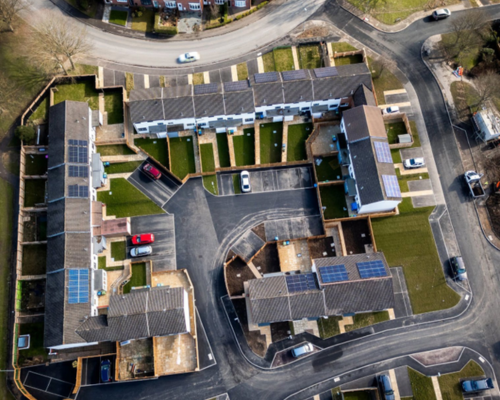
A flagship element was The Courts regeneration scheme, part of the wider Jubilee Fields placemaking programme. Livin invested £6.9 million to redesign and retrofit 94 homes, supported by Homes England funding, alongside road and public realm improvements.
Unpopular one-bedroom flats were converted into larger accessible family homes, while eight properties were demolished to improve layouts, parking, gardens and safer routes. Homes were retrofitted to high energy efficiency standards, increasing EPC rating from C to high B or A and reducing household energy bills by up to £630 per year.
Key issues that were resolved
Key barriers included entrenched deprivation, low demand, estate design contributing to ASB, and limited grant support for estate regeneration.
Homes England funding criteria at the time only supported housing conversions, requiring Livin to self-fund £6.9 million of the £7 million regeneration cost. Despite delivering strong outcomes for the Jubilee Fields Estate, this level of organisational risk is not sustainable at scale.
FACTORS SUPPORTING DELIVERY
Leadership & Oversight
Livin led the regeneration programme, combining estate renewal with wider placemaking and long-term community investment.
Funding & Finance
Livin invested £6.9 million of a total £7million regeneration cost to redesign and retrofit 94 homes, with only the remaining £100,000 from Homes England funding. Livin secured over £400,000 in matched funding between 2023 and 2025 for wider community and employment projects.
Engagement & Accountability
Residents shaped the programme through stakeholder groups, influencing layouts, safety measures and local priorities.
Capacity & Knowledge
The programme combined housing conversion and retrofit, estate redesign, employment support and community investment to deliver wider social outcomes alongside physical regeneration, drawing on the skills and expertise of numerous teams and organisations built up over time.
Planning, Land & Assembly
Selective demolition and estate redesign improved layouts, accessibility, parking, public realm and safer movement routes across the estate.
Outcomes
Housing and supply
The scheme improved 94 homes, creating larger and more accessible family housing. Demand for these refurbished homes was greatly increased from the previous estate.
Economic growth
The programme supported 51 residents into full-time employment and enabled 81 tenants to access £218,000 in financial benefits.
Sustainability
Retrofit works significantly improved energy efficiency and reduced household energy costs.
People and place
Physical regeneration ran alongside intensive community co development. Residents participated in and shaped key decisions through stakeholder groups, influencing layout, safety measures and local priorities.
The regeneration delivered a 59.7% reduction in police-reported ASB, increased community centre use by 25%, improved resident satisfaction to over 87%, and transformed housing demand from two bids per property to more than 140.

