
Northern housing leaders have written to the Chancellor of the Exchequer ahead of the Autumn Budget calling for a package of measures to unlock 500,000 good-quality homes, create thriving communities and drive growth in every postcode.
An article by Vicky Spratt, about the letter and why more support for regeneration is needed, featured in The i Paper.
The joint letter, which is part of our #Renew the North campaign, sets out how housing-led regeneration can help deliver the Government’s ambitions on growth, devolution and regeneration, while benefiting communities across the North. We have signed the letter along with Homes for the North, and the Chairs and Vice Chairs of housing partnerships across the North that own or manage 1.1 million of the region’s 1.4 million social homes.
The signatories are calling on the Government to make regeneration a central part of the Autumn Budget, with a series of proposals that would support councils, housing associations and Mayoral Strategic Authorities to overcome barriers to delivering housing-led regeneration in the North. Our Renew inquiry has found that financial viability is the biggest blocker. Lower land and property values in the region make it harder to get schemes to add up financially – whether renewing or replacing social housing that has reached the end of its life and no longer meets residents’ needs, building on brownfield land or developing homes in town or city centres.
Tracy Harrison, Chief Executive of the Northern Housing Consortium, said:
“The Prime Minister has put housing, devolution and regeneration at the top of his agenda. The opportunity at the Budget and beyond is to make sure those ambitions are matched by the funding and policy framework needed to deliver regeneration.
“Over the summer, I visited regeneration sites across the North and saw first-hand how housing-led regeneration can give hope to communities by improving people’s health and wellbeing, creating jobs, attracting investment and unlocking new homes. I saw how new homes and community facilities have transformed some of the most deprived estates in the country, but with 100,000 social homes reaching the end of their lives, this needs to be replicated on a much larger scale. Investment in replacing and refurbishing homes that are not good to live in and have significant repair costs will help make sure communities are not left behind. It will also free up social housing providers financial capacity so they can build more new homes.”
“The social housing sector in the North, including councils and housing associations, has set out changes the Government can make at the Budget to unleash the benefits of regeneration.”
The letter asks the Chancellor to adopt the measures set out below in the Autumn Budget:
- Adjust and further devolve existing funding to better support regeneration.
- Give Mayors and combined authorities greater flexibility to use the Social and Affordable Homes Programme (SAHP) for regeneration projects that meet local needs. “Continuous Market Engagement” funding should not have a cap on regeneration – introducing one risks capping Mayors’ ability to address local challenges.
- Introduce Homes England performance measures focused on homes renewed and replaced, not just new homes delivered. Current indicators are heavily weighted towards new supply, limiting investment in regeneration projects across the North.
- Allocate National Housing Bank funding specifically for housing-led regeneration to help unlock schemes that are stalled by viability and funding challenges.
- Implement zero-rate VAT on building safety works and extend the zero-rating of energy-saving materials until 2030. This would maintain momentum in retrofitting, improving and regenerating older and colder homes.
- Establish a new “Centre for Regeneration” in the North to build the capacity and capability needed to deliver regeneration at scale, while supporting Mayors with workforce development.
- Extend the term of the National Housing Delivery Fund to ten years to unlock all the North’s brownfield land and 320,000 new homes.
- Provide northern Mayors and combined authorities with devolved, place-based, flexible funding of £500m per year alongside existing funding. Over ten years, this investment would help ensure that no one and nowhere is left behind, while transforming the North’s 100,000 end-of-life social homes. This support would plug current funding gaps, enabling Mayors to:
- Replace or refurbish end-of-life housing so residents can live in good-quality social homes.
- Buy poor-quality private homes, including empty homes, and turn them into safer and healthier social housing.
- Provide viability gap funding for strategically important regeneration schemes that deliver local benefits but are currently financially unviable.
The full letter can be found here.
The proposals come from the NHC’s Renew inquiry, supported by Homes for the North and Muse, which has gathered evidence from social housing providers that collectively own or manage more than one million homes across the North. The Renew report found that housing-led regeneration could unlock 500,000 good-quality homes. This includes reviving struggling high streets with over 100,000 new homes in town and city centres, building 320,000 homes on brownfield land and renewing or replacing 100,000 social homes in need of regeneration.
The letter to the Chancellor has been signed by all the North’s housing partnerships, which bring together the social housing sector – including housing associations and local authorities – to work in partnership with Mayoral Combined Authorities, Homes England and other stakeholders to deliver growth, better places, and new homes.
Case Study:
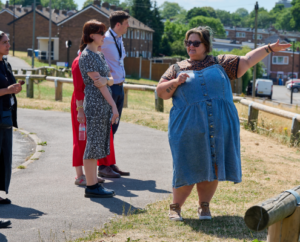 Gleadless Valley – funding needed to deliver regeneration to give community hope and to maintain trust
“My belief is that your postal code does not determine your worth, value, or capabilities. However, when it feels as though where you call home isn’t worth investing in, people can lose their feeling of connection and their sense of value in ‘place’, subsequently disengaging completely. Through meaningful regeneration, residents in areas in the Gleadless Valley can look across the city and see a real, achievable future before them. A future that, by investing in their roots, can give them hope to grow.”
This is a quote from Lara Joyce, Secretary of the Gleadless Valley Tenants and Residents Association, taken from the perspectives article she wrote for the Renew inquiry into housing-led regeneration.
Gleadless Valley is a large post-war housing estate in south-west Sheffield, originally developed in the 1950s and 1960s on a steep hillside. Once celebrated internationally for its innovative design, the area is now among the 10 per cent most deprived communities in England.
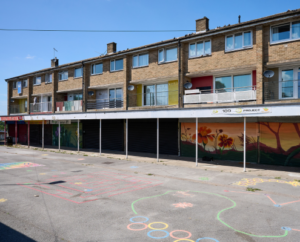 Plans to regenerate the estate first emerged in 2017, with a masterplan that promised refurbishment, demolition and new homes. However, by 2022, the plan had collapsed, with rising costs due to the pandemic and Brexit cited as contributing factors.
In 2024, Sheffield City Council adopted a broader approach, working with community leaders and the local tenants and residents association to develop comprehensive proposals for place transformation and ‘resident power’. The resulting Vision for the Valley, was approved in December 2025 and covers employment, skills, transport, local services, green spaces and residents’ wellbeing, alongside the renewal and refurbishment of homes. Work on the vision is overseen by the Gleadless Valley Regeneration Board, which brings together the council, local politicians and community representatives.
The vision breaks the regeneration down into 12 major projects. Each includes a small ‘making a start’ project, reflecting resident priorities. To build trust and signal that change is coming, the council has fully funded all these projects and has committed to completing them by the end of 2027. Examples include Team Around the Place (TAP), a community-led approach to tackling issues such as fly-tipping, anti-social behaviour and environmental maintenance, and a new Pocket Park for local families.
The council has fully funded two of the 12 projects, including a £30m refurbishment programme. However, the vision includes plans for a total of 1,100 new homes, but the council does not have the resources to fund them and is currently seeking investment. The Regeneration Board has committed to being open with residents about funding for the project, but ultimately, if the vision cannot be delivered, residents’ trust will be broken.
How would #Renew the North policy asks overcome barriers and enable the scheme to progress?
The policy asks would play a major part in making the Vision for the Valley a reality and delivering benefits faster. 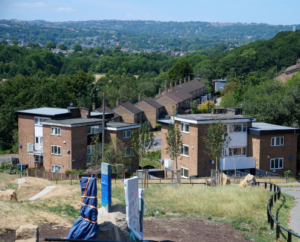
- Providing northern Mayors and combined authorities with devolved, place-based, flexible funding of £500m per year alongside existing funding would be a game changer for Gleadless Valley, playing a major part in plugging the current viability gap. This funding could be used to replace or refurbish housing that has reached the end of its life. The estate is mixed-tenure, so it could also fund the purchase of poor-quality private homes to turn them into safer and healthier social housing, for which funding is not currently available.
- In addition, giving Mayors and combined authorities greater flexibility to use the Social and Affordable Homes Programme (SAHP) for regeneration projects that meet local needs would increase the likelihood of Gleadless Valley receiving funding through this route. National Housing Bank funding specifically for housing-led regeneration would increase borrowing capacity and further plug the viability gap.
- The Vision for the Valley includes brownfield sites, so extending the term of the National Housing Delivery Fund to ten years would support investment in longer-term, more complex sites.
- Launching a national Centre for Regeneration would build knowledge and capacity and help develop the workforce needed to deliver projects like this on a larger scale.
- Implementing zero-rate VAT on building safety works and extending the zero-rating of energy-saving materials until 2030 would help with retrofit and refurbishment of homes on the estate.