
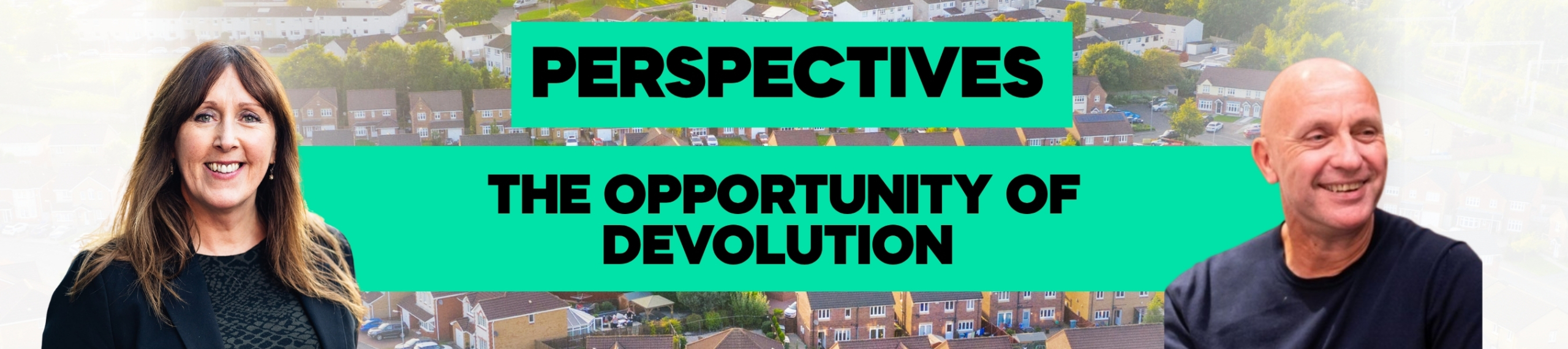
Charlie Norman, Chief Executive of MSV Housing and Chair of the NHC, and Nick Atkin, Chief Executive of Yorkshire Housing, are both actively involved in their regions’ housing partnerships and believe that that devolution offers a massive opportunity. They argue a dedicated, locally administered funding pot for housing regeneration would be transformative. It would allow regions to target investment where it will have the greatest impact and drive long term regeneration.
Too many of the communities we work within have been forced to wait far too long for the regeneration these areas desperately need.
We’re seeing the impact of this on both sides of the Pennines, with once vibrant high streets now lined with shuttered shops, poor quality private rented homes, and a lack of opportunities that pushes people away from the areas where they have strong local connections.
For the people who remain, the strain on health, wellbeing and household finances only grows. Without long-term investment in their local areas, daily life becomes harder, inequalities deepen, and communities struggle to attract and retain the businesses, investment and jobs that make local economies tick.
The community spaces that give places their identity – from leisure centres to cultural hubs – also start to disappear. And when they do, people are left feeling disconnected, overlooked and left behind.
At the same time, many people are left living in poor quality homes that are cold and costly to heat. Housing related health issues already cost the NHS £1.4 billion every year. And they don’t just harm people’s health; they affect children’s education too. Children growing up in overcrowded, damp homes are more likely to experience health problems, meaning they miss school and struggle to catch up with their studies.
Energy inefficient homes only compound these problems further. A typical three bedroom EPC D home can cost around £2,000 more a year to heat than an EPC A rated equivalent sized home, which can be a huge strain on already stretched family finances. All of this highlights how regeneration isn’t a “nice to have”. It’s essential for the health and wellbeing of the communities we work within.
When regeneration is done well, it has the power to reset a community’s hopes for the future – especially when decisions are made closer to the places where people live.
That’s why devolution matters, and why the North is already showing what is possible.
We know local people and local leaders understand their communities better than anyone. We see the pressures and the potential every day. Devolution is giving our regions the tools, flexibility and accountability to shape solutions that genuinely reflect local needs.
The North is leading the way here, with Mayors acting as strong champions and advocates for investment in the places that need it most. With new powers over housing, planning and economic development, supported by joined up funding, Mayors can link regeneration, decarbonisation, skills, education and local growth in a way that meets the needs of local communities. They can also develop spatial strategies that bring housing, transport, land use, infrastructure and jobs together, giving places a coherent plan rather than a series of disconnected, short-term projects.
Housing partnerships are fundamental to this shift too. Across Yorkshire and Greater Manchester, we’re seeing unprecedented levels of collaboration between housing associations, Mayors, Combined Authorities and councils to share insight, remove barriers and speed up the development of affordable homes.
Our partnerships are bringing together practical experience, local knowledge and a strong track record of delivering affordable housing. They also unite organisations around a shared goal: building the right homes, in the right places, with the right support and infrastructure around them.
The templates are already there for us to pick up and use. If you look at the Climate Innovation District in the South Bank area of Leeds – this was a forgotten part of the city that has been brought back to life with a vibrant, low carbon community. Or the Northern Quarter in Manchester, which is now bustling and has been the forerunner to increasing the city centre population of Manchester from just 500 people 30 years ago to over 100,000 today, alongside the transformation in Sale West, Ancoats and now Victoria North.
The key ingredients to every successful regeneration project have been strong civic leadership and a clear vision for a place, combined with a sustained approach to securing funding for infrastructure to support wider economic development.
While devolution is creating the conditions for real progress, there are still gaps that risk holding back too many communities. The new flexibilities in the Social and Affordable Homes Programme, including the focus on bedspaces and a more practical portfolio approach to additionality, are welcome and show a clear recognition that different places need different solutions. But for many neighbourhoods facing long-term decline, these changes still do not go far enough.
Large parts of the North that urgently need regeneration fall outside eligibility because they cannot meet the additionality requirement, which means proving the homes would not be built without funding. These are places where the market has not functioned for years and where regeneration will not happen without long-term, flexible investment. Without a dedicated approach to housing led regeneration with ringfenced funding, these communities risk being left behind – again.
There is also the challenge of those homes that have reached the end of their life. In some areas, regeneration means complete redevelopment, which includes demolition and replacement with homes that meet modern needs and expectations.
 The English Devolution and Community Empowerment Bill is an important step and will give regions more of the local powers they need. But if we are serious about levelling up the North, we need stronger and more ambitious decisions on policy and funding. A dedicated, locally administered funding pot for housing regeneration would be transformative. It would allow regions to target investment where it will have the greatest impact and drive long term regeneration.
Crucially, it would allow regions to bring housing, health, decarbonisation, economic development, infrastructure and transport together into one coherent programme, instead of navigating separate schemes with separate rules. This long term, locally accountable investment could unlock the kind of regeneration that lasts; improving homes, health, local economies and giving people new opportunities to thrive.
Devolution is giving regions the powers and partnerships needed to make this happen. But to realise the full potential of regeneration across the North, we need the dividend in the form of the right funding and flexibility. With stronger tools in the hands of Mayors, supported by committed housing partnerships and a shared focus on community-led change, we can finally unlock the transformation that communities have been promised for decades.
Regeneration is about far more than building new homes in one area or refurbishing old ones in another. It’s about improving quality of life and addressing the needs of places that have been overlooked for too long.
If done right, regeneration can reach the places that need it most, particularly those that have waited the longest. The evidence shows how it can create communities’ people are proud to live in, where opportunities grow and where everyone has the chance to build a better future. That has to be our legacy from this once-in-a-generation opportunity to deliver wholesale, meaningful change for future generations.
The perspectives collection showcases a range of opinions about regeneration. The views expressed in the articles are the author’s and do not necessarily reflect the position of the NHC or the Renew inquiry.