
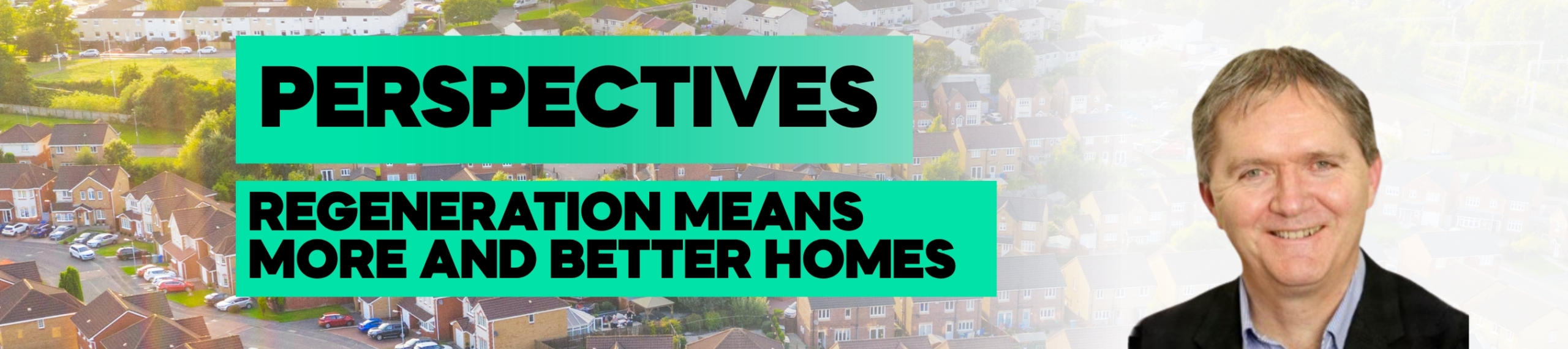
The transformative benefits of regeneration
Regeneration presents the opportunity to simultaneously address quality, supply, place, and inequality. Our Plan includes 80 strategic regeneration projects across the North; around a third of these (26 in total) are in authorities ranked among the 10% most deprived areas in England.
These projects, delivered in partnership with other developers, are expected to bring forward approximately 43,000 new homes, with their construction generating around £5.2 billion in investment. The wider economic impact is significant: the programme is projected to create, directly and indirectly, the equivalent of a full year’s work for around 58,725 people across the UK, including approximately 42,000 jobs for Northern residents.
Regeneration offers the chance to reshape neighbourhoods holistically, supporting investment in public spaces, energy systems, and local infrastructure. By addressing long-standing issues such as poor-quality housing, inefficient layouts and lack of community cohesion, regeneration helps restore confidence in places and address inequalities.
Our research with Savills shows that regeneration and redevelopment can generate long-lasting public value beyond the physical transformation of places and that is not replicated with refurbishment alone. These include carbon savings from meeting higher EPC bands, capital values, improvements to health and wellbeing, and improved productivity.
How supportive policy can enable us to go further
The government’s Comprehensive Spending Review marked a significant moment for the future of housing and infrastructure, signalling a clear and long-term commitment to regional growth. With increased funding for the Social Affordable Homes Programme (SAHP), confirmed rent convergence, and reformed housing standards, the sector has the financial and regulatory certainty needed. Notably, the added flexibility within SAHP has been widely welcomed, reflecting government recognition of the transformative role of regeneration.
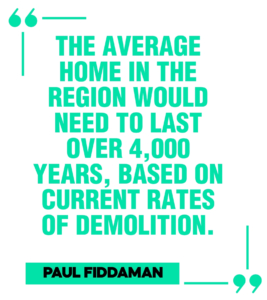 While this renewed focus and clarity is welcome, many of our members remain concerned about mounting operational pressures driven by expanding regulation. These pressures are especially acute in the North, where our research with Savills, drawing on data from the 2023–24 English Housing Survey, highlights the scale of the challenge: around 136,000 social rented homes failed the Decent Homes Standard in 2023–24, and the average home in the region would need to last over 4,000 years, based on current rates of demolition, in addition to this 71,000 more homes are needed each year.
Housing providers are carefully balancing investment in upgrading existing homes with delivering new homes. Regeneration offers a way to support both priorities at once, but the tension between improving current stock and building new homes will be a defining challenge for landlords over the next decade.
While this signals progress in the right direction, significant barriers remain that limit the ability of providers to deliver regeneration at scale.
Future solutions
- Balancing trade-offs: This is not a challenge the sector can resolve alone. The long-awaited national housing strategy is needed to help housing associations navigate these trade-offs and to place regeneration at the centre of delivery.
- Flexibility: Current funding rules limit the proportion of homes that can be replaced within a regeneration scheme. This creates barriers for large, long-term projects and reduces certainty for both housing providers and government partners. Greater flexibility in how funding can be used, particularly allowing providers to combine different funding streams more easily, would help unlock regeneration schemes that are currently stalled and support more consistent delivery.
- Affordability gaps: Often related to lower land values in the North, represent the difference between a scheme being viable or not. The ability to bridge these gaps is crucial if we are to realise the potential of sites that can transform places and drive economic growth. Our research backs this up showing that an annual subsidy gap of up to £1.3bn exists if those areas most in need of regeneration are to deliver the same number of homes as those least in need.
- Planning: Given the breadth of ongoing reforms, clarity on how the different layers of planning policy – national, strategic, and local – will interact, is essential. Lack of clarity and inconsistencies in approach contribute to significant delay and our members caution this continues to remain as a top barrier to large scale regeneration.
- Fragmented land ownership: Many of the sites identified in our plan are split between multiple public and private landowners, creating significant barriers to delivery and can undermine scheme viability. A more interventionist government approach is needed to unlock large housing sites that have stalled due to fragmented ownership.
- Political uncertainty: While mayoral powers over housing have expanded and offer opportunities to accelerate local growth, increasing political divergence across the UK may create a more complex operating environment. Members working across multiple local authorities may face differing policy priorities, funding approaches, and planning expectations, making consistent long-term delivery more challenging.
Investing in regeneration is essential to sustain progress, empower communities, and unlock the North’s long-term potential. H4N and its members are committed to delivering this in partnership, but ultimately collaboration and prioritisation across stakeholders is required to fully realise the economic, social, and community benefits of housing-led regeneration.
Working together, we can secure the benefits of regeneration across the North.
The perspectives collection showcases a range of opinions about regeneration. The views expressed in the articles are the author’s and do not necessarily reflect the position of the NHC or the Renew inquiry.