
The philosophy
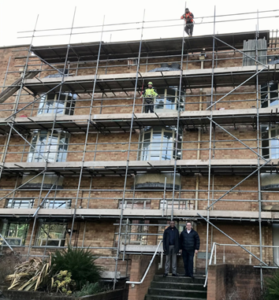 Unity’s approach to regeneration is informed by experience. Initially, we aimed to help disadvantaged people simply by providing quality housing.
We still believe in the potential of a safe stable, decent, affordable home to provide a launchpad for people to transform their life chances. We now know, however, that for most people with disadvantages solving their housing problem is not enough on its own. People in deprived communities do not just face poor housing. They are poor in other respects: resources/income, resilience/confidence, and relationships/connection. These additional barriers hold them back, and they need help, support and encouragement to overcome them before they can progress, let alone thrive.
While housing is crucial, access to health, jobs, training, education, and enterprise opportunities are equally important. For many disadvantaged individuals, setbacks due to inequality, discrimination and prejudice, can undermine confidence and resilience, so this must be rebuilt before they can make use of opportunities.
Definition of regeneration
Based on our experience, we define regeneration differently to how it is commonly referred to in the sector. We believe it must be more than increasing the housing supply, replacing rundown buildings, or engaging with residents on new facilities, because these changes do not in themselves empower people. , then a regenerated community must be defined as where people are empowered and willing to improve themselves and the places where they live.
So, for us the sign of regeneration is where a community shows physical signs of improvement alongside being equipped with the resources, skills, and resilience to sustain its own growth. It thrives through active participation, shared responsibility, and continuous improvement, ensuring that change is not a one-time event that immediately starts to depreciate, but an ongoing journey toward a better quality of life for all residents.
Our regeneration metrics
Just as important as the definition is the metrics to measure regeneration because so many regeneration schemes have failed to secure lasting improvement despite the lofty claims of their architects. Our key metrics to set against the starting position (baseline) are:
- People are engaging with work
- New businesses are being set up
- Greater take up of training and education opportunities
- Occupational health metrics are improving
- People feel more confidence (index is rising)
- Increase in resident participation
Many regeneration projects are measured by the number of homes built and improvements to environmental or recreational areas, but these benefits are unsustainable unless residents can maintain them.
At Unity, regeneration is more than bricks and mortar—it is about creating thriving, resilient communities where people feel empowered to shape their own future. Our approach to Renew, would be to place tenant voice and meaningful engagement at the centre of every decision. We believe that regeneration succeeds only when it is done with communities, not to them.
Unity’s regeneration model
Unity, along with other housing associations in Leeds, has significantly enhanced both the housing and physical environment in Chapeltown, where we are located. However, our main approach to regeneration focuses on more than just housing.
We have two main divisions: Unity Housing manages 1,400 social housing units in Leeds’ LS7 and LS8 areas, while Unity Enterprise helps residents with employment, enterprise, training, and education to boost their financial opportunities.
Unity Enterprise provides business support services, beginning with outreach to promote entrepreneurship. We help aspiring owners create business plans, support new enterprises, and assist early-stage entrepreneurs in building sustainable businesses with access to a business hub and rental units. As businesses grow, we also offer space for expansion or guidance on relocating.
Alongside this our dedicated employment team works to help economically inactive individuals become job-ready, providing pathways into employment, training, and education to enhance long-term career outcomes.
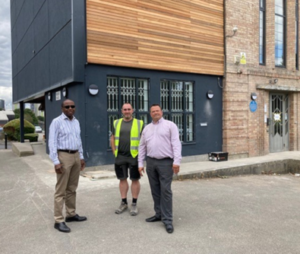
Unity currently leases 150 business units to 98 businesses, many of which were set up by local people. Together they have brought to the area 900 jobs and 45% of the employees live in in LS7 and LS8. This approach represents a very different model for area regeneration, diverging from traditional housing association practices.
Importantly we cannot regenerate the whole community by just serving our tenants, so these services are accessible to both Unity tenants and the wider community. Despite the modest size of our team, we assist around 500 clients annually. On average, over the past four years, each year we have helped twenty people into business, 140 to secure employment and 250 people into further training or education to improve career prospects.
The role of NHC members
Northern Housing Consortium members have a vital role in supporting stronger communities. By championing housing-led regeneration and sharing best practice, NHC members can help tackle poor-quality housing, deliver growth, and build places where people feel proud to live.
The perspectives collection showcases a range of opinions about regeneration. The views expressed in the articles are the author’s and do not necessarily reflect the position of the NHC or the Renew inquiry.